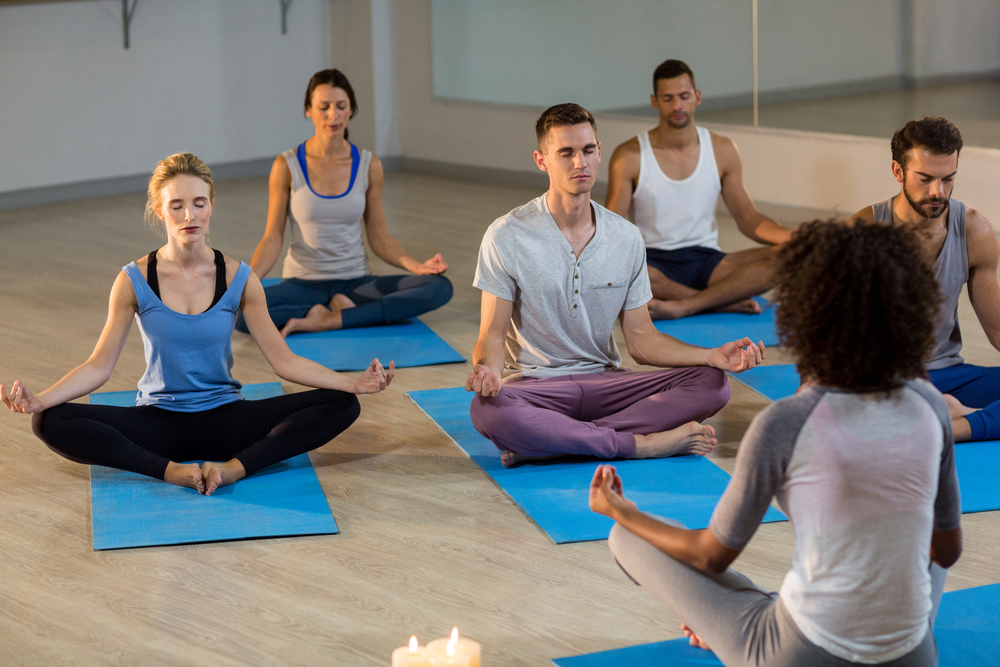

Technically speaking, you do not need to make a huge investment to get started in Yoga. I will look...
Mobility & Flexibility - How Does Yoga Help With Both?
Across numerous interactions with Yogis, a common theme surfaces when we discuss why we started practicing Yoga in the first place. Many people (well informed ones!) look to Yoga as a means to be able to improve their flexibility and mobility.
Flexibility and mobility are terms that are quite often used interchangeably. Do they mean the same thing? If so, why are there two distinct words and have we been practicing diction redundancy all this while? As it turns out, we can discern between the concepts of flexibility and mobility. There are distinctive traits between the two concepts that we will cover. Keep in mind that as our understanding of the anatomy develops and evolves, definitions can update too.
At the same time, we will also introduce some common Yoga poses that will allow you to work (predominantly) on your flexibility or mobility. Keep in mind that many poses in Yoga do not target a singular muscle in true isolation.
Mobility
We can define mobility to be a person's capability to express and maintain a physical position derived from active range of motion. Before we dive further into this explanation, let us briefly mention how our human body moves and the role our muscles play.
Let us take bicep curls as a simple example. Let us assume that our forearms are resting on a surface and we are gripping onto a weight with our hands. To follow through the motion of a bicep curl, our bicep muscle must contract, lifting your forearm and the held weight alongside it. The bicep in this case is known as the Agonist muscle. At the same time, we have our tricep, stretching out simultaneously. The tricep is known as the antagonist muscle.
For a true expression of a person's mobility, the range of motion must be achieved by his or her own agonist muscles. Needless to say, working on your mobility entails working on different muscle groups that will need to be activated to adequately support a range of motion that your body might not be entirely used to or comfortable with at a moment in time.
Yoga Poses That Improves Mobility
- Triangle Pose
- Standing Splits
- Wheel Pose
- Half Moon
Flexibility
Opposite to the concept of mobility, flexibility does not require an active assumption or participation of a person to express or maintain a movement / pose within his or her range of motion. Therefore, there isn't a requirement of an agonist or contracting muscle to be able to express one's flexibility.
In simpler terms, flexibility is 'improved' when assistance (whether through another person or with natural gravitational forces) allows one to passively participate in deepening of stretches.
Yoga Poses That Improves Flexibility
- Half Splits
- Pigeon Pose
- Child's Pose